Made in Italy is not a stamp of approval, but a way of thinking. It is an unspoken code that governs how things are made, where the tension between nature and human intent creates an almost philosophical dialogue. In wine, this manifests as a pursuit not of perfection, but of harmony—a balance between what the land offers and what the winemaker extracts from it.
Elegance in wine
Elegance in wine is often misinterpreted as simply a matter of grace. But to truly understand it, one must first consider what it is not. Elegance is not about overwhelming concentration or raw force—it is the delicate interplay between strength and finesse, concentration and lightness.
Consider two Tuscan wines made from Sangiovese. One is dense and robust, with heavy tannins and dark fruit. The other is lighter, with silky tannins and a finish that doesn't weigh down the palate. This contrast is technical, rooted in winemaking decisions: fermentation temperature, skin contact, barrel aging. Longer maceration and extraction create power; emphasis on freshness and balance creates elegance. The difference is philosophical—restraint over excess.
Over the last three decades, Tuscan wine has evolved from the bold Super Tuscans of the 1990s to a return to finesse in the 2000s, rediscovering Sangiovese's regional characteristics and embracing elegance over power.
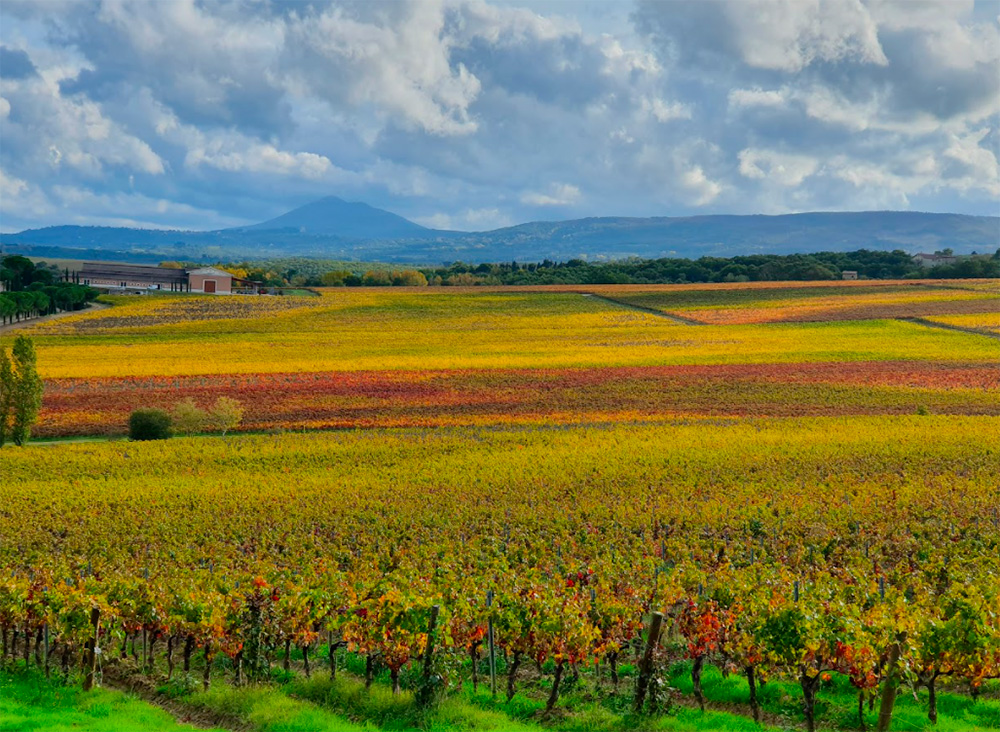
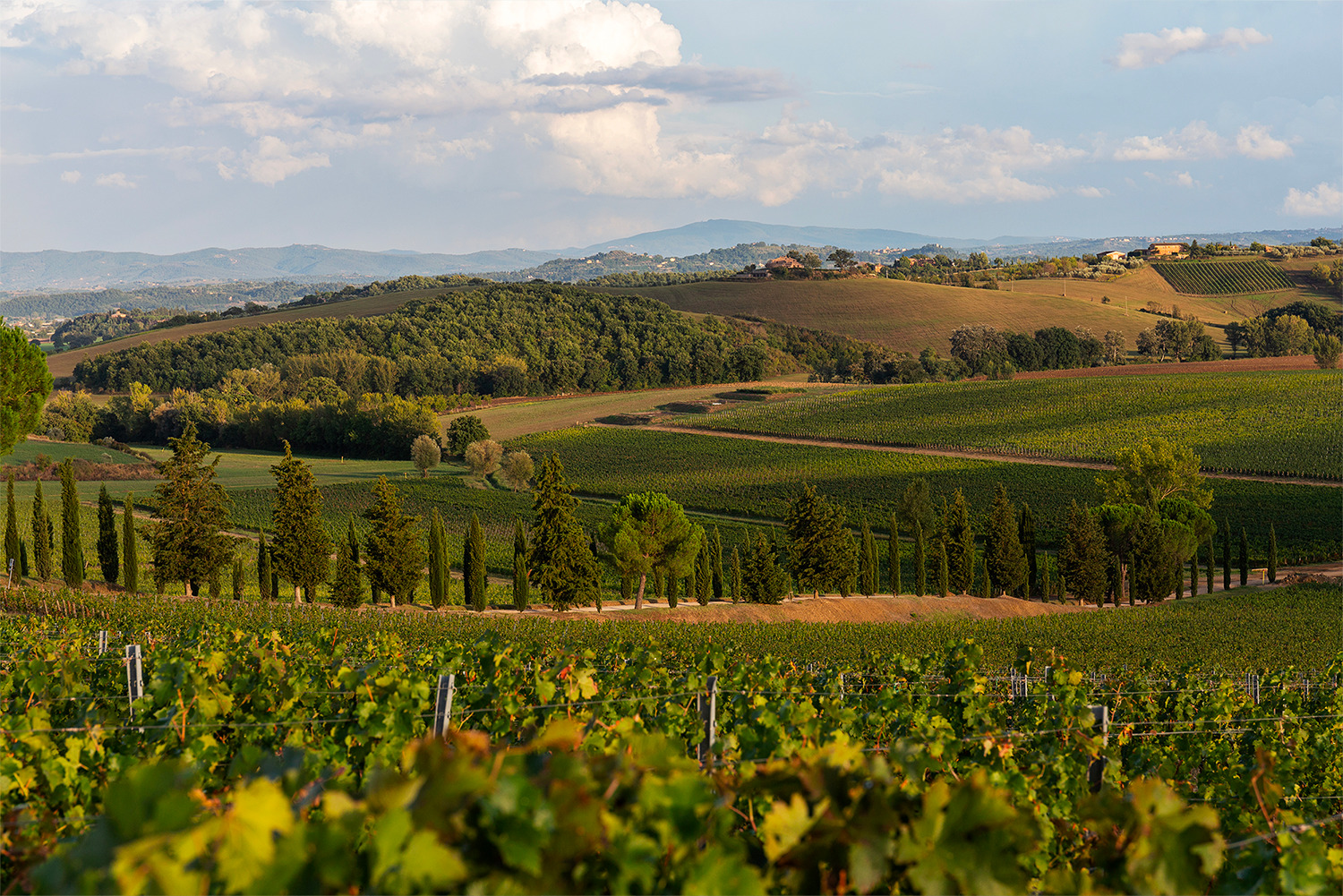
Carpineto's portfolio embodies this evolutionary journey. With over 50 years of winemaking across Tuscany's most distinguished denominations—from Chianti Classico's cool heights to Montalcino's elevated vineyards and Maremma's coastal estates—the winery has cultivated an approach where elegance emerges not from a single formula but from understanding each terroir's distinct voice. Each wine tells a different story of how the architecture of elegance is built: through soil composition, microclimate, and the restraint to let the land speak.
Chianti Classico
Nestled in the Greve Valley, Dudda represents Chianti Classico at its most refined. The land is dominated by galestro, a shale-rich soil with excellent drainage that forces vines deep for nutrients. Beneath it, alberese sandstone adds minerality and freshness.
At 500 meters above sea level, significant day-night temperature variations slow ripening, developing balanced acidity and vibrant aromatics. This "cold zone" produces wines of remarkable finesse—a defining characteristic of Chianti Classico Gran Selezione.
Carpineto's Chianti Classico Gran Selezione from this 2-hectare cru showcases pure Sangiovese. Fermented with indigenous yeasts and aged 18 months in French oak, it exhibits intense ruby color with red berries, vanilla, and delicate spice—structured for both immediate pleasure and decades of evolution.
Vino Nobile di Montepulciano
Montepulciano's high-altitude vineyards, rich in galestro and alberese, create wines with delicate balance. The soil preserves acidity even in warm years, while altitude tempers intensity.
The region's evolution mirrors Tuscany's broader shift: from bold international blends in the 1990s back to traditional Sangiovese-based wines emphasizing refinement over concentration.
Carpineto's Vino Nobile di Montepulciano Riserva, made from Prugnolo Gentile with Canaiolo, ages two years in Slavonian and French oak. Red berries, violet, and tobacco aromas lead to velvety tannins and a long, harmonious finish.
Brunello di Montalcino
Montalcino's highest vineyards—around 500 meters—produce the region's most elegant expressions. High elevation slows ripening, developing subtle, nuanced flavors in Sangiovese Grosso. The mix of clay, sand, and limestone provides pronounced minerality.
Over three decades, Brunello has shifted from concentration to elegance, emphasizing fruit purity and terroir expression over power.
Carpineto's Brunello di Montalcino Riserva from the denomination's highest vineyards exemplifies this evolution. Aged 42 months in oak, the wine shows intense ruby color, wild berries, vanilla, and subtle spice, with mature tannins and the mineral precision high-altitude vineyards provide.
Farnito Cabernet Sauvignon
Can Cabernet Sauvignon express Tuscan character? Introduced in 1987, Farnito suggests terroir speaks louder than varietal origin. From high-density vineyards in Gaville and Chianciano, the wine emphasizes integration over extraction—deep fruit character without excessive weight, refined tannins, long but not heavy finish.
Farnito Valcolomba
Farnito Valcolomba, from Maremma's coastal estates, this Merlot-based wine demonstrates that maritime influence can contribute to elegance when properly managed. Eighteen months in French and American oak develops complexity while sea breezes maintain freshness—intense color and complex aromas with surprisingly refined tannins.
Molin Vecchio
This blend of Sangiovese, Cabernet Sauvignon, and Syrah from Montepulciano represents Carpineto's most complex expression: Molin Vecchio IGT. Over 45 months of aging allows the varieties to integrate—Sangiovese's acidity, Cabernet's structure, Syrah's aromatic complexity. The result is elegant not despite its complexity but because of how that complexity is managed.
Carpineto's wines demonstrate that elegance in winemaking is neither accident nor inheritance—it is the result of conscious choices made at every stage, from vineyard management to barrel selection. Each wine reflects the balance between what the land provides and what human judgment extracts from it.
Whether from the cool heights of Dudda, the storied hills of Montepulciano, or Montalcino's elevated vineyards, these wines share a common thread: the pursuit of harmony over power, finesse over force. In an era where wine markets often favor immediate impact, Carpineto's commitment to elegance represents more than a stylistic choice—it is a philosophy that values restraint, patience, and the long conversation between terroir and technique.
This is the essence of Made in Italy winemaking: not simply producing wine, but crafting expressions that honor both the land's gifts and the wisdom to recognize when less becomes more.