Tasting Notes
Montalcino: a journey through the history and flavors of Carpineto’s wines
Rosso, Brunello and Riserva: Carpineto wines and the flavors that complete them
In Montalcino, wine is not just wine. It is the story of a land that has transformed its identity into something recognized all over the world. Here, Sangiovese Grosso finds the ideal conditions to express itself at the highest level, and the wines born from these hills carry with them the history of the land, the work of generations, and the patience required to do things properly. Carpineto wines are the expression of this deep bond between viticulture and territory, and when they sit at the table with traditional Tuscan dishes, they tell a story worth listening to.
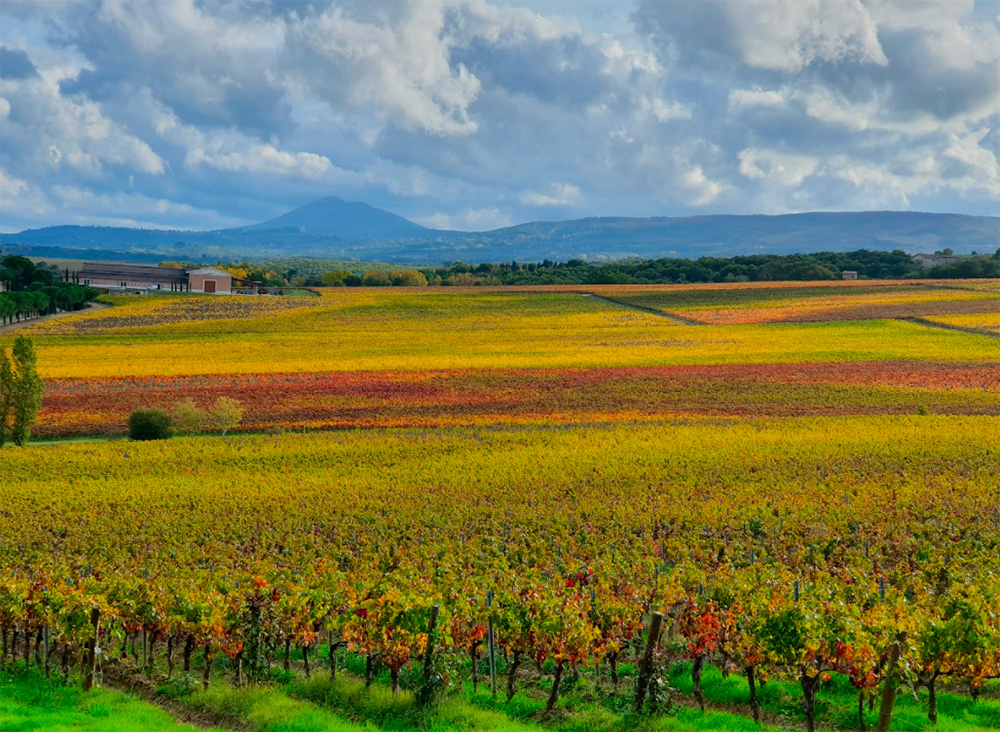
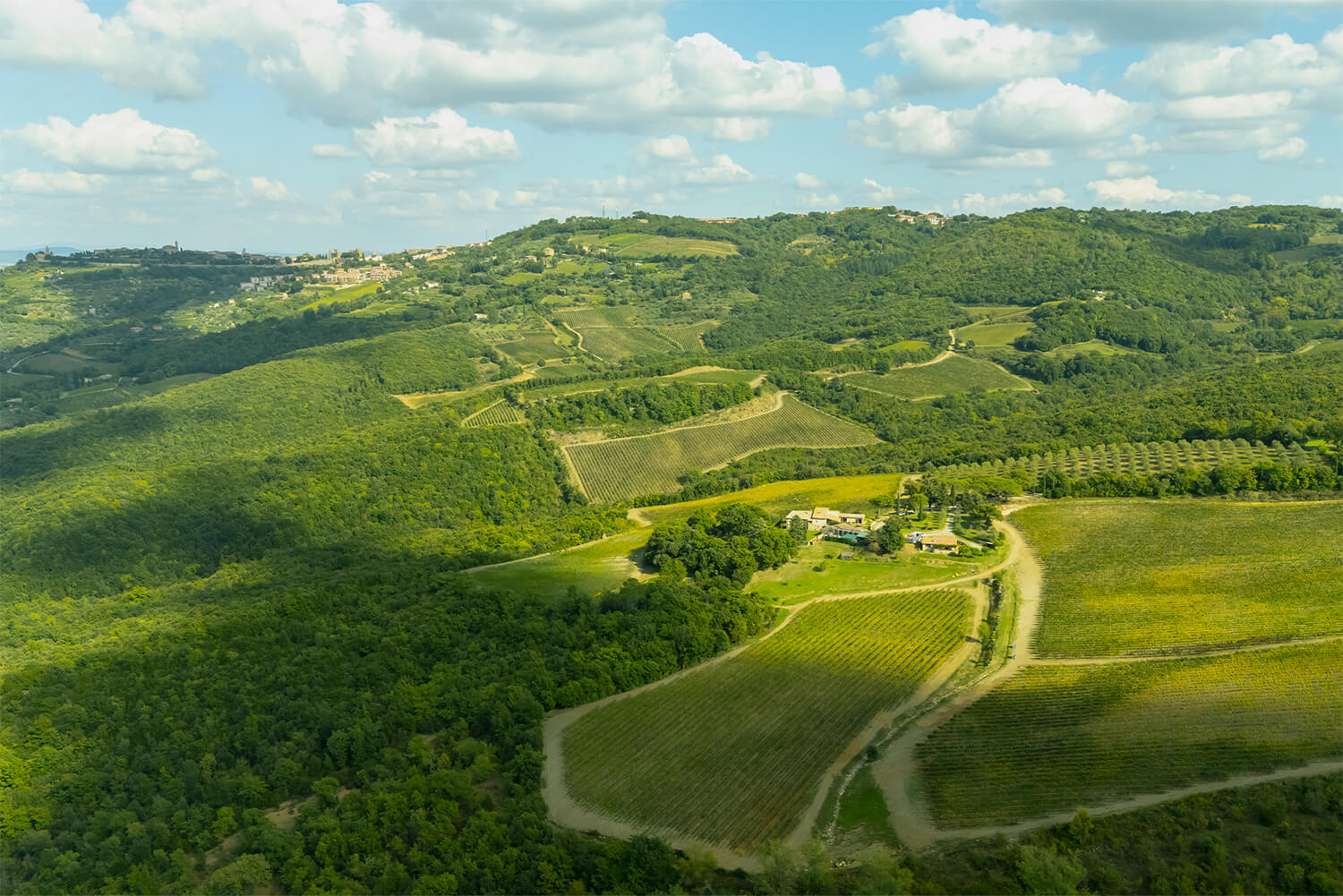
The Carpineto Estate lies in one of the highest points of the appellation, about 500 meters above sea level. The soil here is sedimentary, with a backbone of galestro beneath clay deposits dating back to the Pliocene epoch, fifteen million years ago.
The vineyards enjoy a panoramic, breezy position, surrounded by dense Mediterranean scrub that protects them from the humid currents coming from the Maremma. This particular exposure gives the wines great elegance, minerality, and longevity, allowing them to evolve for decades in the cellar.
Rosso di Montalcino
Carpineto Rosso di Montalcino is the first encounter with Sangiovese Grosso from this area. Vinification takes place with maceration of the skins in the must for about ten to twelve days at a controlled temperature between 25 and 30°C. After fermentation, the wine matures for a short period in Slavonian oak barrels of various sizes.
The result is a ruby-red wine with warm garnet notes, clean on the nose with floral aromas, especially violet. On the palate it is velvety, savory, round, with an already important structure despite its young age.
It is a wine that is not afraid to get its hands dirty, just like the dishes born from humble Tuscan cooking, such as ribollita.
Ribollita is perhaps the dish that best represents the soul of Tuscan cuisine: black kale, cannellini beans, and stale bread that breaks down into the thick soup. A dish born from the need to waste nothing, which, reheated the next day, becomes even better and more flavorful.
Rosso di Montalcino pairs well because it has the right freshness to lighten the density of the soup, the savory character needed not to be overwhelmed by the intense flavors of black kale and legumes. The wine cleanses the palate between spoonfuls, preparing it for the next bite. It should be served between 18 and 20°C, never too cold, so as not to lose its expressiveness.
Brunello di Montalcino
Carpineto Brunello di Montalcino DOCG 2020 is 100% Sangiovese Grosso from the estate’s highest vineyards. Vinification is carried out with indigenous yeasts in temperature-controlled stainless steel tanks.
To preserve the typical Sangiovese bouquet, frequent pump-overs and a long maceration on the skins are performed. The wine then matures for three years in Slavonian oak barrels of various sizes, followed by at least six months of bottle aging in temperature-controlled cellars. The color is deep ruby red with slight garnet reflections.
On the nose it is clean, refined, broad, and persistent, with notes of vanilla, cherry, raspberry, and licorice. On the palate it is dry, warm, soft, and full-bodied, with remarkable persistence.
This complexity calls for a dish equally structured, capable of standing up to it, such as wild boar stew.
Wild boar stew is a dish that people in Montalcino have always known. The meat has a strong, gamey flavor that transforms after hours of slow cooking in red wine with juniper, rosemary, and sometimes a few cloves. The sauce reduces, becoming thick and aromatic, and the meat softens until it almost melts on the fork.
A wine is needed that has the strength to stand alongside these powerful flavors without being overwhelmed, and that can converse with the dish’s complexity. Brunello has this ability.
Its red fruit notes connect with the herbal aromas already present in the sauce, the structure matches the density of the meat, and the acidity cuts through the richness and rebalances every bite.
It is a pairing that works because wine and dish share the same territorial DNA. The wine should be served between 18 and 20°C, ideally decanted to allow it to open up.
Brunello di Montalcino Riserva
Carpineto Brunello di Montalcino Riserva represents the pinnacle of production. Here, aging lasts at least 42 months in oak barrels of various sizes, followed by further aging in cellars with naturally constant, controlled temperature and humidity. The color is deep ruby red, with strong anthocyanin concentration and slight garnet reflections. The bouquet is intense and persistent, with clear notes of forest berries, light hints of vanilla, and a spicy note on the finish that will gain even more prominence with time. On the palate it confirms the breadth and intensity that describe a wine of great depth, destined for a long aging journey.
Such an important wine needs a dish worthy of it, one prepared on special occasions, like Bistecca alla Fiorentina.
Bistecca alla Fiorentina is more than a dish; it is a ritual respected for centuries. Chianina beef, at least three fingers thick, with the T-bone separating the tenderloin from the striploin.
It is cooked over live embers, remaining rare inside and seared outside. It is seasoned only with coarse salt after cooking. Nothing else is needed — the quality of the meat must speak for itself. It is a dish that demands an important wine, and Brunello Riserva rises to the occasion.
It has the elegance not to overpower the flavor of the meat, but also the structure needed to stand up to such an intense bite. The acidity cuts through the fat, the wine’s complexity dialogues with the complexity of the meat, and each sip cleanses the palate and prepares it for the next forkful. It should be served between 18 and 20°C, in a decanter, to allow it to fully express its breadth.
Carpineto wines in Montalcino are born from the meeting of a unique territory and the time required to do things properly. When these wines meet the dishes of Tuscan tradition, a natural dialogue is created — a story that flows through glass and plate, speaking of a land that still knows what it means to wait